Showing posts with label Foundling Museum. Show all posts

Friday, 12 June 2015

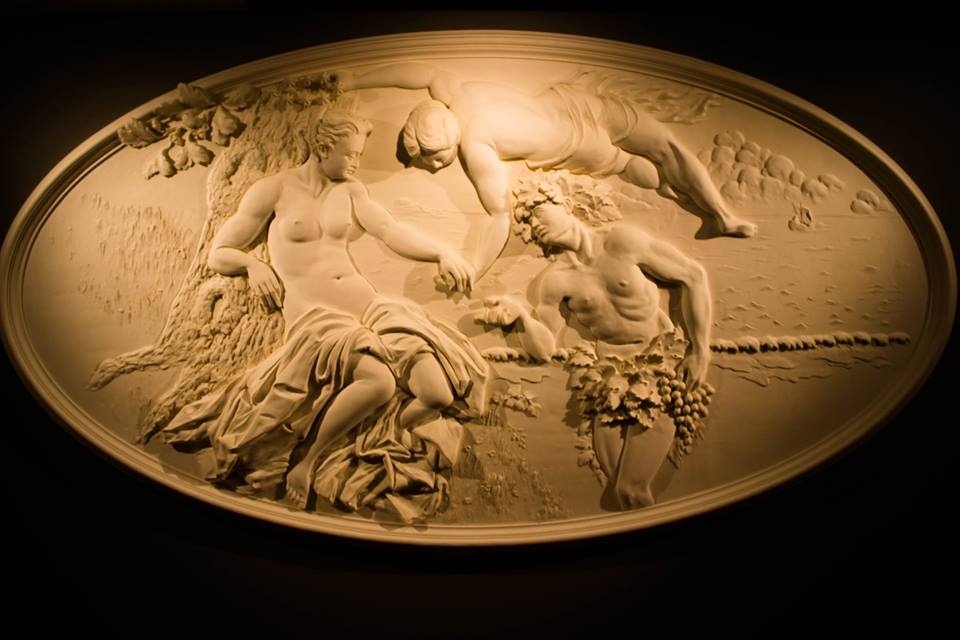
The Foundling Museum and its exhibition of 'Lines of Beauty', exploring Rococo Plasterwork and the Art of Geoffrey Preston.

A Review By Mayo Joosten

Having never heard of the Foundling Museum, or indeed of Geoffrey Preston, getting an invite to todays Press Preview was a surprise, but a good one. Originally founded by Thomas Coram, the then Foundling Hospital admitted its first babies in 1741, and continued as such until 1954, when it placed its last pupil in foster care, having cared for and educated around 25,000 children. Even though in the 18th Century London was a thriving city, poverty was rife, and it is estimated that as many as 1000 babies a year were left in the streets and so became known as 'foundlings'. As the Foundling Hospital operated until 1954, some of its later residents still have their own memories of what it was like to live here.

Both well known artists George Friedrich Handel and William Hogarth were influential in the hospital, with Handel donating an organ and conducting a yearly concert of Messiah in the Hospital's chapel, and Hogarth encouraging the leading artists of the time to donate work, thereby establishing the UK's first public art gallery. Today, the hospital continues as the children's charity Coram, whilst the adjacent Foundling Museum, built in the 1930's on the site of the original hospital, continues to have art exhibitions and events on a regular basis. Seeing both the paintings and plasterwork up close, really brings home the time and skill which have gone into making it. 'Lines of Beauty' is all about Rococo Plasterwork, it includes small, beautifully crafted relief panels, as well as the Museums' amazing Rococo ceiling designed by William Walton. Heavily influenced by nature, this type of decorative plasterwork depicts the many different types of leaves and flowers found all around us, as well as animals and people. The exhibition explains how it is made from original drawing to finished product, with various stages in between. I was lucky enough to meet Geoffrey Preston, who explained that stucco plaster, (essentially a mix of lime mortar and gypsum), is not an easy material to work with, taking years of practise to perfect. Whereas there is a lot of symmetry within the works, (ceilings, relief panels, etc.), no 2 pieces are the same as they are all hand sculpted. Throughout the exhibition, you are able to take a journey through the painstaking creative process, drawings, photographs, clay models and silicone moulds, as well as seeing displays of the artists tools and raw materials. The current exhibition: 'Lines of Beauty, Rococo Plasterwork and the art of Geoffrey Preston' runs from tomorrow through to 6th September.




Thursday, 2 August 2012


The Triumph of Pleasure: Vauxhall Gardens 1729 - 1786

11 May 2012 - 09 September 2012
The Foundling Museum
Free with admission to the Museum. Booking not required.
In the eighteenth century, Vauxhall Gardens was a refuge for Londoners from the filth and noise of the city, offering an all embracing sensual experience that entertained up to 100,000 people a year.
Under the management of Jonathan Tyers, the Gardens enabled ordinary Londoners to experience contemporary art and design, high quality music and al fresco dining. Tyers’ two most important allies in the 1730s were his friend and neighbour, the artist William Hogarth, and the composer George Frideric Handel. Between them, Tyers, Hogarth and Handel created the phenomenon that came to be known as the English Pleasure Garden, imitated across Britain and Europe and as far afield as the Americas, New Zealand and Australia.
The Triumph of Pleasure contains over ninety exhibits drawn from major public and private collections across the country The Triumph of Pleasure: Vauxhall Gardens 1729 – 1786, will display works by Hogarth, Canaletto, Hayman, Rowlandson and Gainsborough. Visitors can view original manuscripts and song sheets which will be supported by a series of specially commissioned concerts. One of the last surviving supper box paintings will be on display alongside objects associated with the Gardens and the Foundling Hospital. This will include an identifying token left by a mother with the baby she left at the Foundling Hospital. This token is a copper 1737 Vauxhall Garden season ticket, attributed to Hogarth. The exhibition will also be the first time François Roubiliac’s three terracotta portrait busts of William Hogarth, George Frideric Handel and Jonathan Tyers have been seen together.
Vauxhall Gardens was an all-embracing sensual experience, becoming an international byword for pleasure and now, over 200 years later, visitors to the Foundling Museum can experience the sights, sounds and tastes of the Gardens once more. Curated by David Coke.
Click here to find out about admission prices and opening hours.
Supported by The Monument Trust, with additional support from The Finnis Scott Foundation, Sheepdrove Trust, the Idlewild Trust and The Triumph of Pleasure Supporters Group. If you would like to receive monthly ebulletins about the exhibition and events, including concerts, talks and family fun sessions click here.
Images: J.S Muller after Samuel Wale, A General Propspect of Vaux Hall Gardens, engraving, 1751, Private Collection; The Grand Walk, Vauxhall Gardens, London, Canaletto, c.1751 © Collection Compton Verney; Foundling Token, Vauxhall Garden Season Ticket © Foundling Museum; William Hogarth's gold admission ticket to Vauxhall Pleasure Gardens © The Trustees of the British Museum; After Thomas Rowlandson, Dr Syntax at Vauxhall Gardens, engraving, 1817, Private Collection