Welcome to London! Your Guide to London.
The All About London Team has lived and worked in London for many years. We have detailed knowledge of London, feel free to ask us about Places to visit, places to stay and things to do. London Tours, Attractions, Hotels, Accommodation, Events, Theatre, Shows and Places to eat.
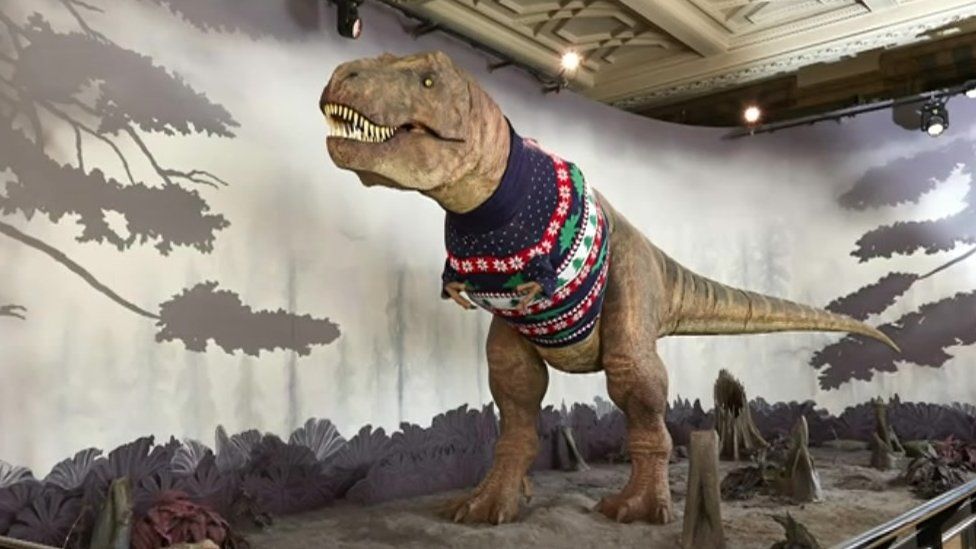
A giant Christmas jumper has been created for a Tyrannosaurus Rex at London's Natural History Museum.
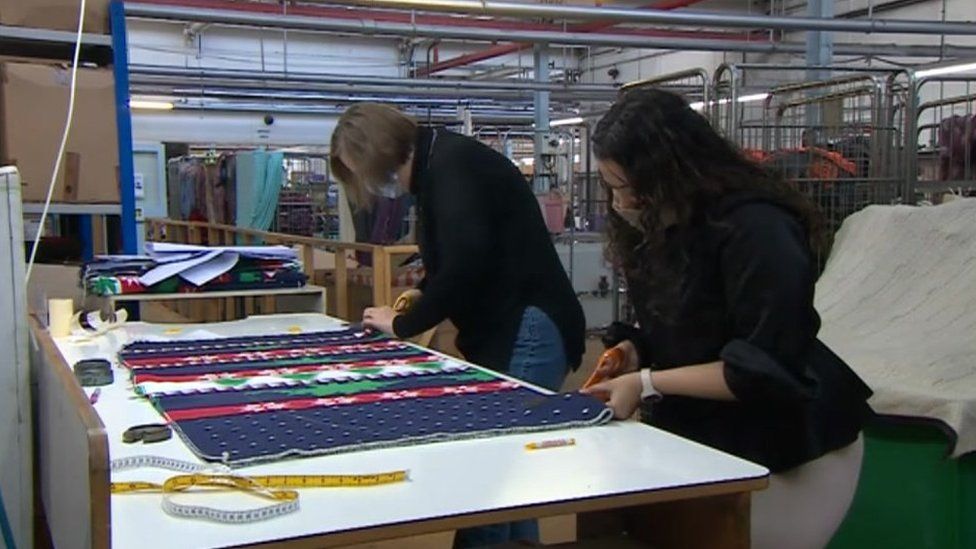
The animatronic T.rex is sporting the festive knit, which has been made by a family-run firm in Leicester.
British Christmas Jumpers has previously produced sweaters for Ed Sheeran and the Houses of Parliament.
Director Snahal Patel said the latest design was the company's biggest job yet and took staff 100 hours to complete.
"We've never done anything like this. My dad's never done anything like this and he's been in this business for 35 to 40 years," Mr Patel said.
"It's probably the biggest thing we've made and going forward into the future there are other big projects planned."
Image caption,
The Leicester firm has been making Christmas jumpers since the 1980s
The jumper is 12 times heavier than a regular jumper and human-sized versions are also available to buy from the museum shop to help fund the venue's work.
Carla Treasure, from the attraction, said they wanted to do something fun to encourage people back after a tough year.
"I think he looks absolutely fabulous," she said.
"It's been a really, really challenging year for heritage and visitor attractions and we really wanted to do something which would generate interest.
"All the proceeds from the sale of these jumpers goes back to supporting the museum, not only for its pioneering research but also caring for its 80m specimens."
She said they chose the Leicester firm because the jumpers were made in the UK and manufactured using recycled yarn and plastic bottles.
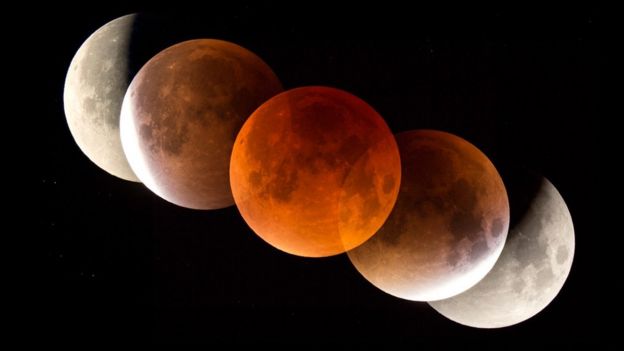
Skywatchers will be treated to the longest "blood moon" eclipse of the 21st Century on Friday.
As it rises, during this total eclipse, Earth's natural satellite will turn a striking shade of red or ruddy brown.
The "totality" period, when light from the Moon is totally obscured, will last for one hour, 43 minutes.
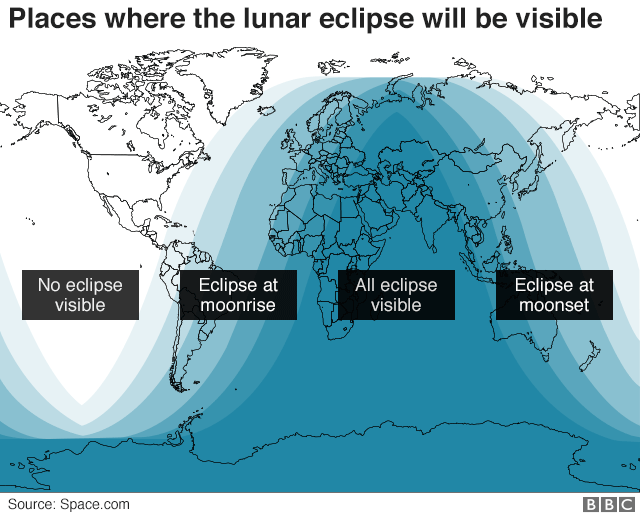
At least part of the eclipse is visible from Europe, the Middle East, Africa, Australia, most of Asia and South America.
In the UK, rain clouds permitting, the Moon will appear entirely red - fully eclipsed by Earth - from when it rises at 21:00 to 22:15 BST.
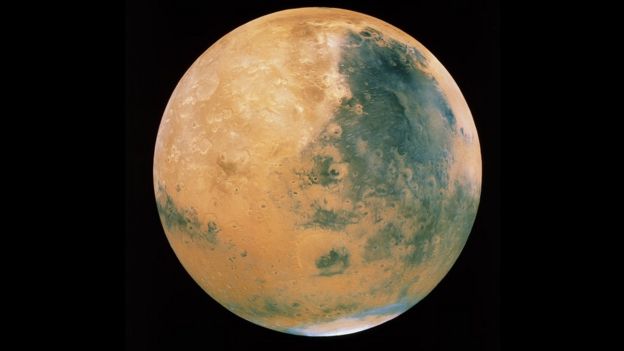
On the same night and over the coming days, Mars will be at its closest point to Earth since 2003 - visible as a "bright red star" where skies are clear.
Why will the eclipse last so long?
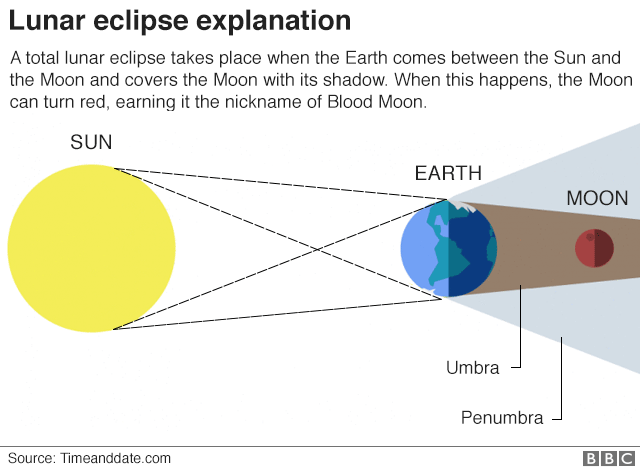
The Moon will pass right through the centre of the Earth's shadow, at the shadow's widest point.
Image copyrightSPLImage captionThis will be the longest 'blood moon' this century, as sunlight is filtered through Earth's atmosphere
"This is actually almost as long as a lunar eclipse could be," Prof Tim O'Brien, an astrophysicist at University of Manchester, explained.
It coincides not only with Mars's close approach, but with what he described as a "procession of planets" - a line-up of our celestial neighbours that will give skywatchers a particularly good view of Venus, Jupiter, Saturn and Mars.
Eclipse terms
Umbra: The darker, central part of the Earth's shadow
Penumbra: The lighter, outer part of the shadow cast by our planet
Because the Moon is far away from Earth relatively speaking - its orbit is an ellipse, so it moves closer and further and looks larger and smaller from Earth.
"Mars will look like this beautiful bright red star just below the Moon," said Prof O'Brien.
"Every couple of years or so, the Earth overtakes Mars on the inside as it orbits the Sun, so Mars is closest to us.
"And because of the elliptical shape of the orbit, it's even closer than normal; it really is a great time to spot Mars."
Where will the eclipse be visible?
Where skies are clear of cloud, the spectacle will be visible almost everywhere around the world, with the exception of North America. The eclipse will already have started by the time the Moon rises over the UK and Western Europe.
Prof O'Brien explained that people in the UK would "need to have a clear south-eastern horizon as the Moon comes up" in order to see it.
The best views - weather permitting - could be across Eastern Europe, Central and East Africa and South East Asia, from where the entire eclipse will be visible.
Image copyrightSCIENCE PHOTO LIBRARYImage captionAt its closest approach, Mars will be 54.6 million km from Earth. At its furthest point from Earth, the two planets are 400 million km apart
So, from the UK and Europe, the south-east will be the place to look for the rising, eclipsing Moon with bright red Mars below. But for views of elsewhere in the Solar System, Jupiter will be in the southern sky and Venus in the west.
Dr Emily Brunsden, director of the University of York's Astrocampus, added that this eclipse was a "micro blood moon".
"This is a total eclipse at a time in its orbit when it is close to being the farthest from Earth, or at apogee," she said.
"Hence the Moon is fractionally smaller than usual."
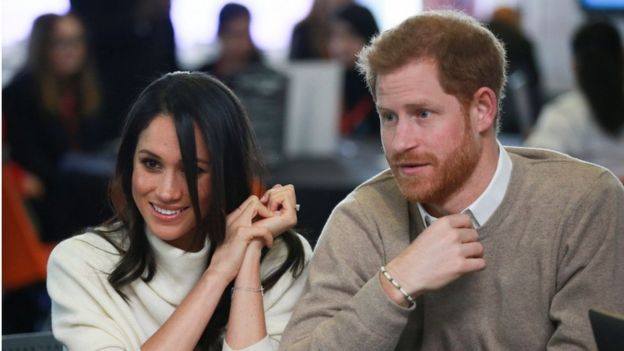
Prince Harry and Meghan Markle have chosen an organic lemon and elderflower cake for their wedding in May.
Instead of a more traditional fruit cake, it will involve "spring" flavours and be covered with buttercream and decorated with fresh flowers.
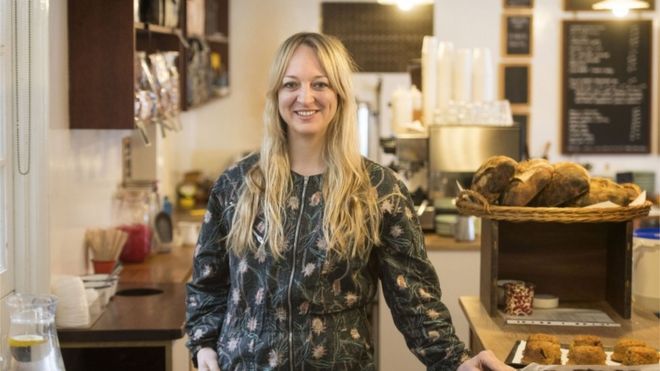
The couple have enlisted Californian pastry chef and food writer Claire Ptak, owner of the Violet Bakery in east London, to make it.
Ms Ptak said she was delighted and that she shared the couple's values on food.
Kensington Palace said the couple were "very much looking forward to sharing" the cake with their wedding guests on 19 May.
Image copyrightAFP/ GETTY IMAGES
Like Ms Markle, Ms Ptak was raised in California. She worked as a pastry chef at Chez Panisse under chef and campaigner Alice Waters.
She later moved to the UK where she worked at The Anchor and Hope gastropub in Waterloo and set up a market stall on Broadway Market, east London.
She said: "Knowing that they really share the same values as I do about food provenance, sustainability, seasonality and most importantly flavour, makes this the most exciting event to be a part of."
Mrs Markle has previously interviewed Ms Ptak for her former lifestyle website TheTig.com which covered topics such as food, beauty, fashion and travel.
Take a look around the Chelsea Flower Show, a day before doors open to the general public.
PA
The world's most famous gardening event, the RHS Chelsea Flower Show, attracts around 165,000 visitors every year.
PA
This year's event- which will be the 104th show - sold out almost two weeks before the gates open on 23 May. It closes on Saturday 27 May.
GETTY IMAGES
Each year the show has a royal visit...
GETTY IMAGES
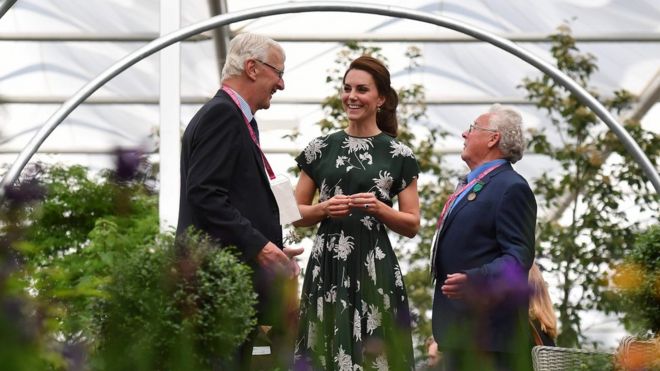
The Duchess of Cambridge was given a tour of the displays and spoke to exhibitors.
REUTERS
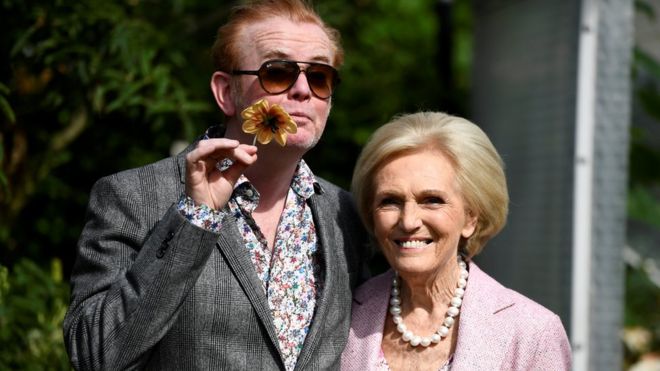
BBC Radio 2 presenter Chris Evans has teamed up with Mary Berry to create The Chris Evans Taste Garden, to celebrate the tastiest plants growing in UK gardens.
PA
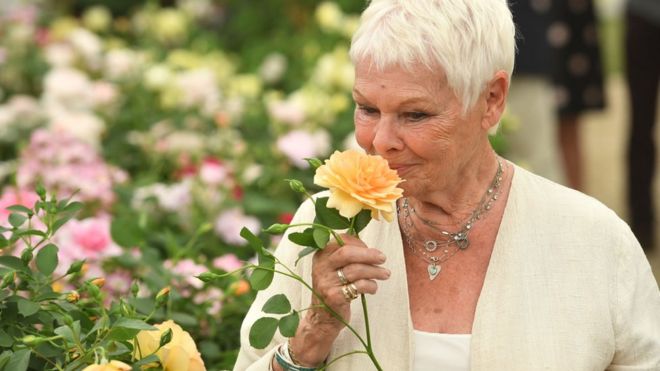
Dame Judi Dench took a first look at the apricot rose named after her.
PA
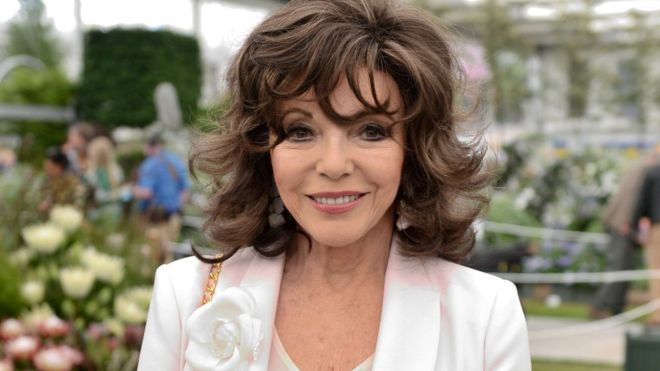
Actress and author Dame Joan Collins was another famous face enjoying the gardens...
PA
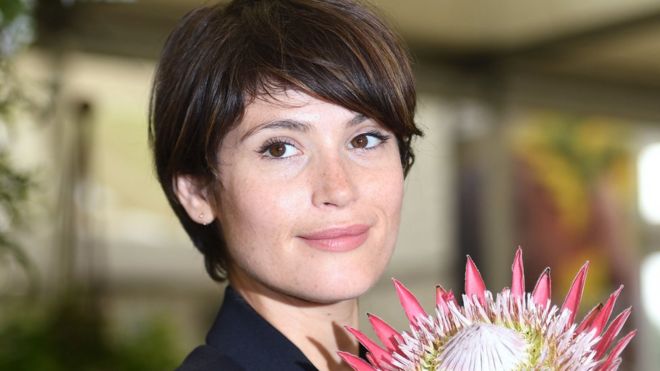
... as was actress Gemma Arterton, pictured here at the Burncoose Nurseries stand.
GETTY IMAGES
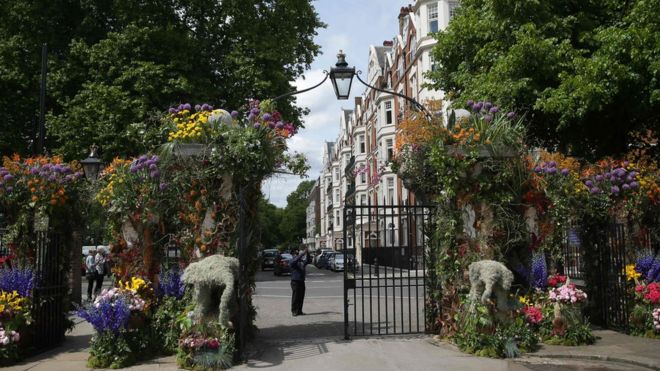
The "Gateway to the Garden Safari" designed by Simon Lycett forms one of 28 gardens at the show.
GETTY IMAGES
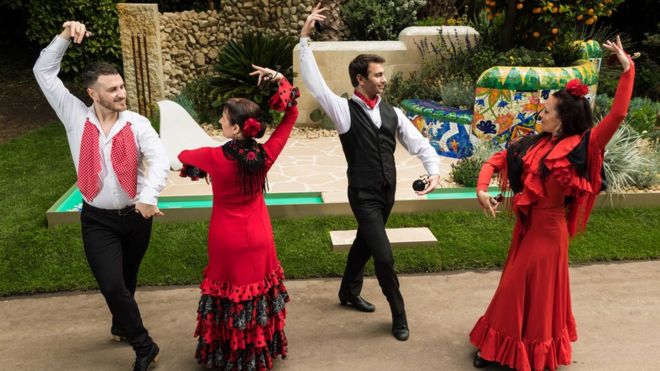
Traditional Spanish flamenco dancers added some authenticity to award-winning designer Sarah Eberle's garden, which was inspired by the art, architecture and colours of Barcelona.
PA
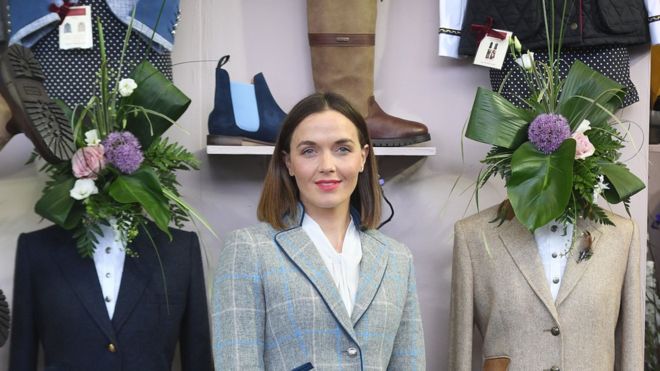
Olympic cyclist Victoria Pendleton was spotted at the press preview on Monday.
PA
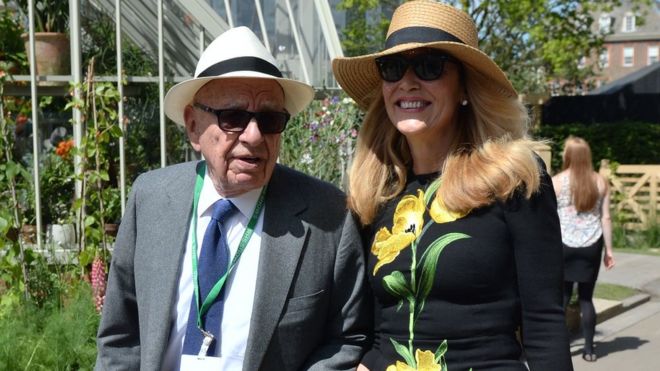
As were media mogul Rupert Murdoch and Jerry Hall.
PA
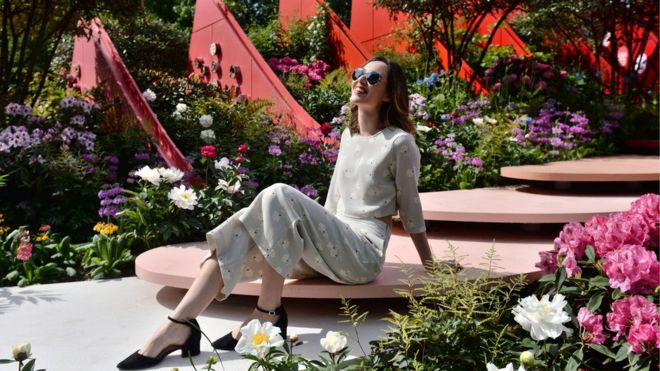
Blogger Naomi Harris relaxed in the Chengdu Silk Road Garden.
GETTY IMAGES
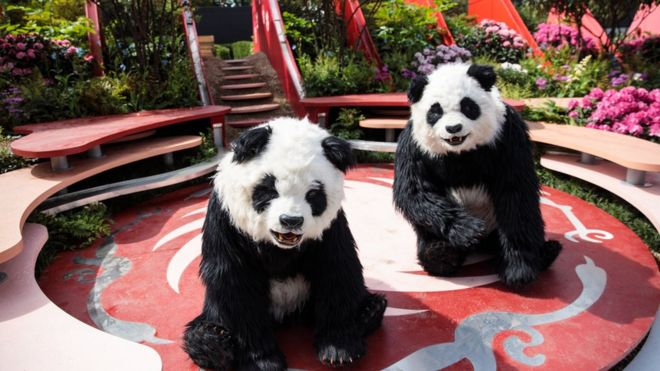
Huge sculptural fins (seen behind the panda-suited performers) represent a Chinese mountain range
PA
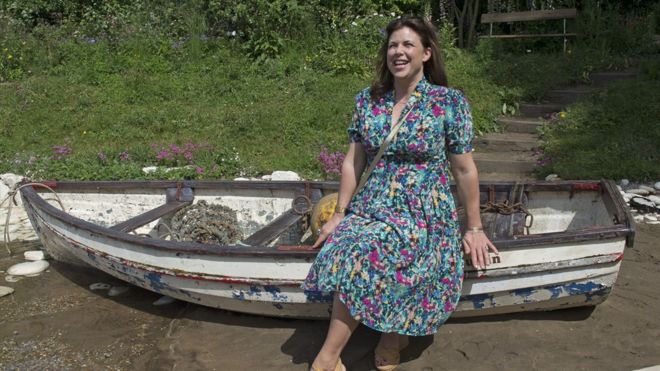
TV presenter Kirstie Allsopp was in the Welcome to Yorkshire Garden.
REUTERS
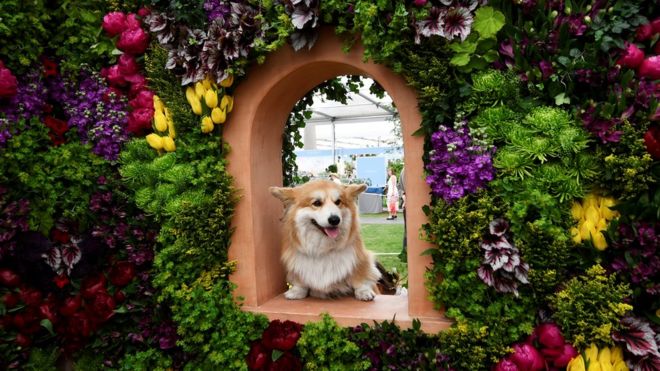
The Queen (unfortunately not her corgis) is expected to visit the show on Monday afternoon.
REUTERS
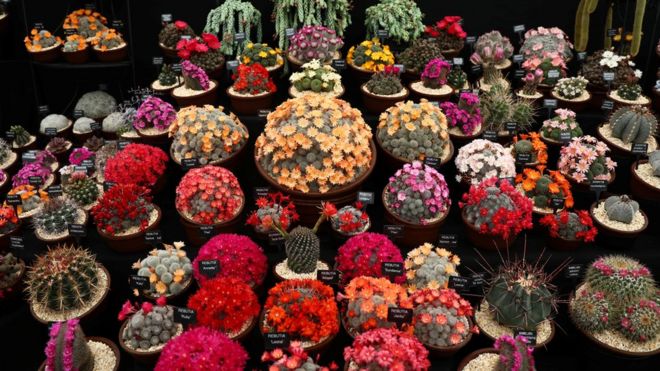
In total there will be more than 100 plant displays in the Great Pavilion.
REUTERS
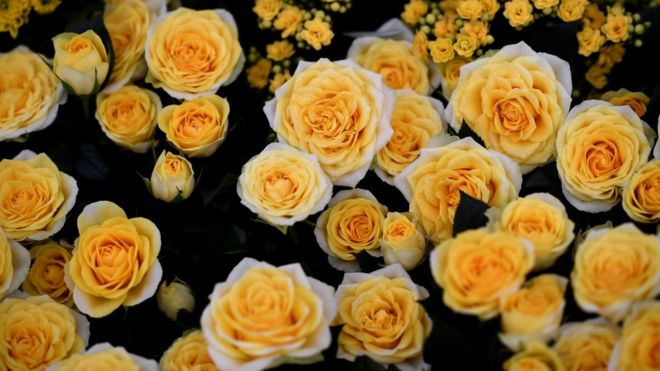
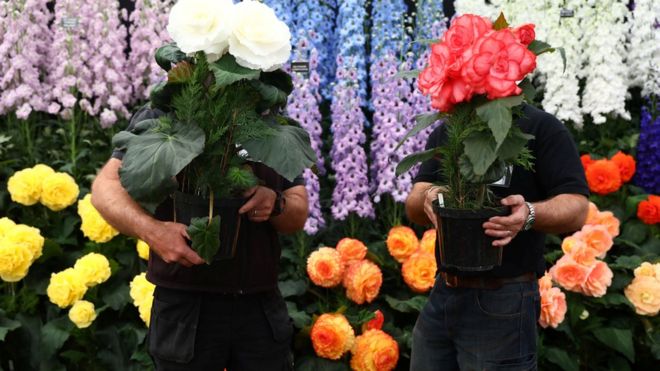
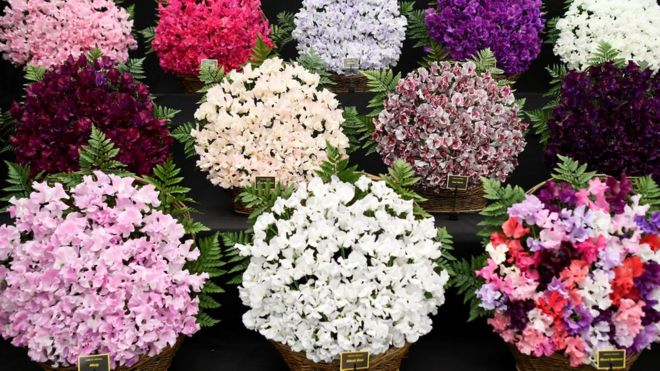
From roses...
REUTERS
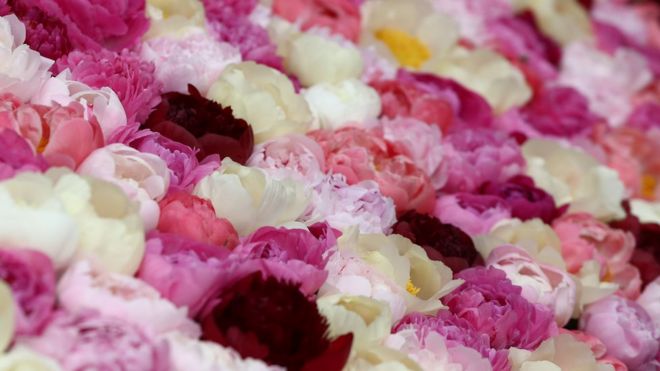
... to peonies.
REUTERS
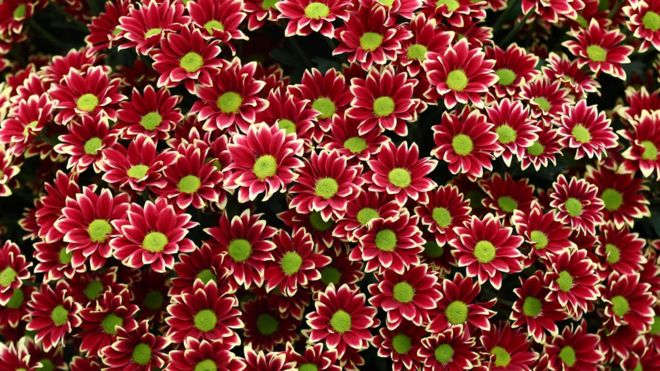
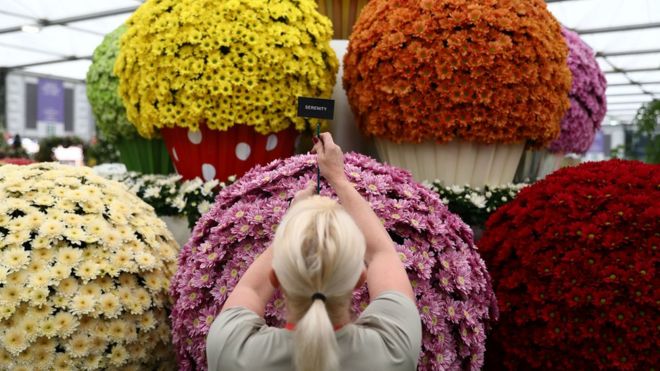
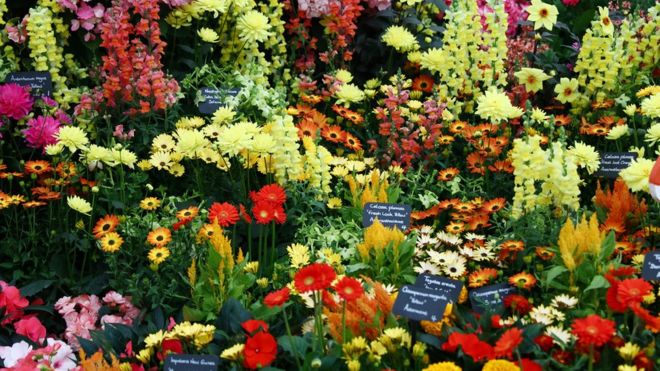
Chrysanthemums...
REUTERS
... to cacti.
PA
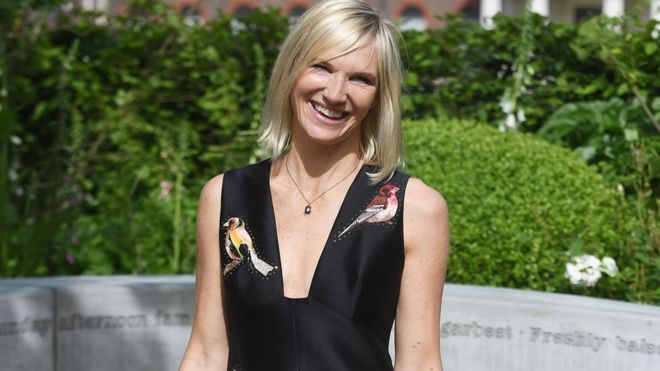
Broadcaster Jo Whiley will be unveiling her Scent Garden - one of five Radio 2 Feel Good gardens designed to show how plants can enrich one of five senses. The DJ said tending her plants keeps her sane and "calms me when there's chaos in my head".
REUTERS
The cycle of planning for the show lasts 15 months.
REUTERS
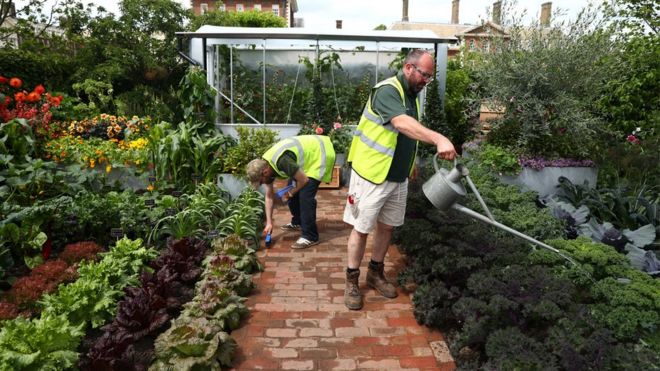
It takes 800 people 33 days to build the show from bare grass to the finished article.
REUTERS
All the show gardens are built from scratch in just 19 days and will be dismantled in only five days.
PA
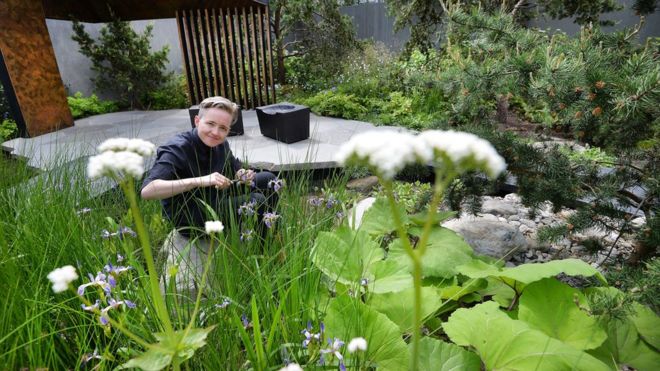
Charlotte Harris, designer of the Royal Bank of Canada garden, said she spent time "exploring northern Ontario on foot and by canoe – navigating the waterways, pine forests, flora and granite of the boreal" when designing the garden.
PA
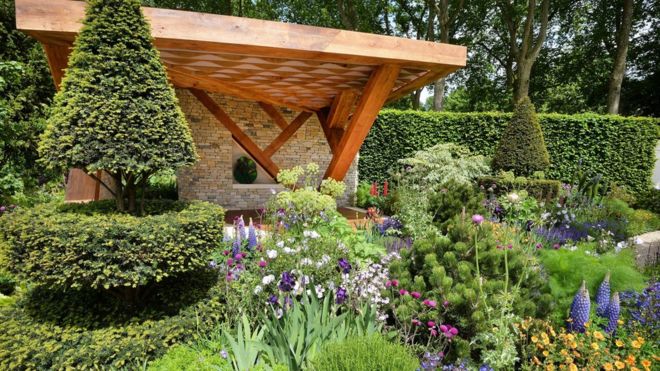
The roof of the oak and limestone loggia in the Morgan Stanley garden is designed in the shape of a single leaf.
BEN STANSALL/ AFP
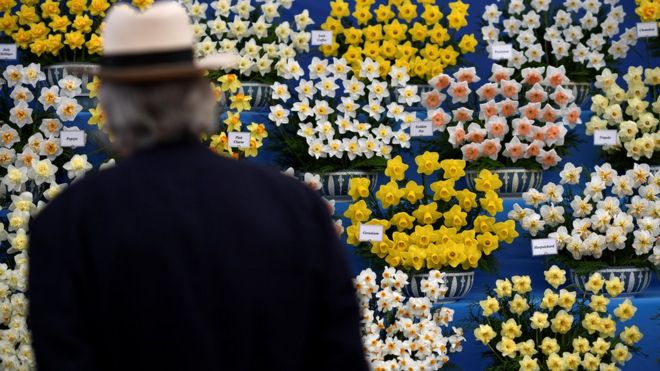
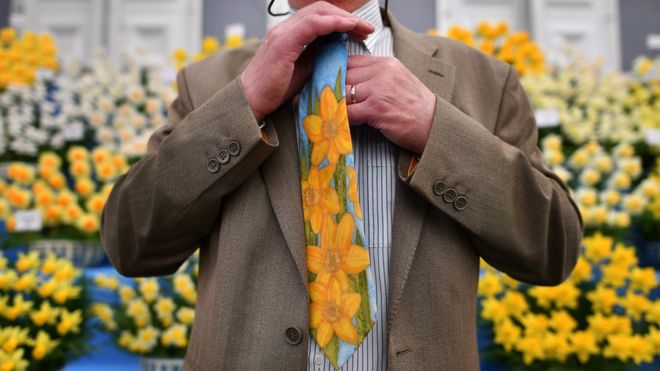
A man wears a tie covered in daffodils to match the selection behind him.
REUTERS
Some gardens took inspiration from the animal kingdom...
GETTY IMAGES
... these driftwood sculptures are by sculptor James Doran Webb.
GETTY IMAGES
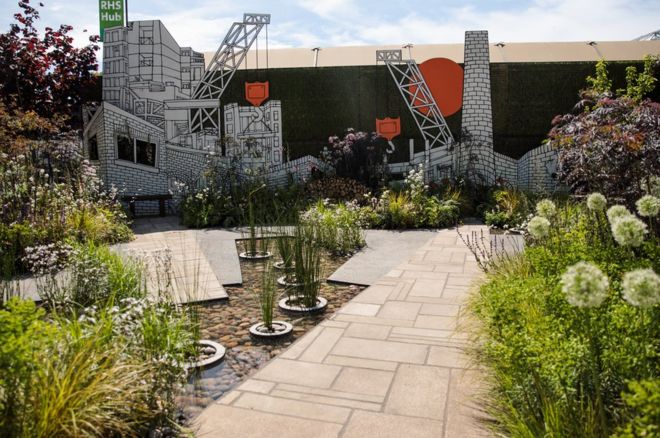
The RHS Greening Grey Britain Garden is inspired by the idea of putting plants into urban spaces.
REUTERS
The show is organised by the Royal Horticultural Society which was founded in 1804.
REUTERS
It has been held on the grounds of the Royal Hospital Chelsea since 1913.
REUTERS
BBC television coverage of RHS Chelsea began in 1958. Today the BBC screens 12.5 hours dedicated to the show.